🔑 Key Takeaways
- Strategic Pivot: Vivo's MWC presence and global Ultra launch mark a deliberate challenge to Samsung and Apple in the premium segment.
- Optical Arms Race: The leap to a 400mm equivalent lens, co-engineered with Zeiss, represents a major investment in physical optics over pure software enhancement.
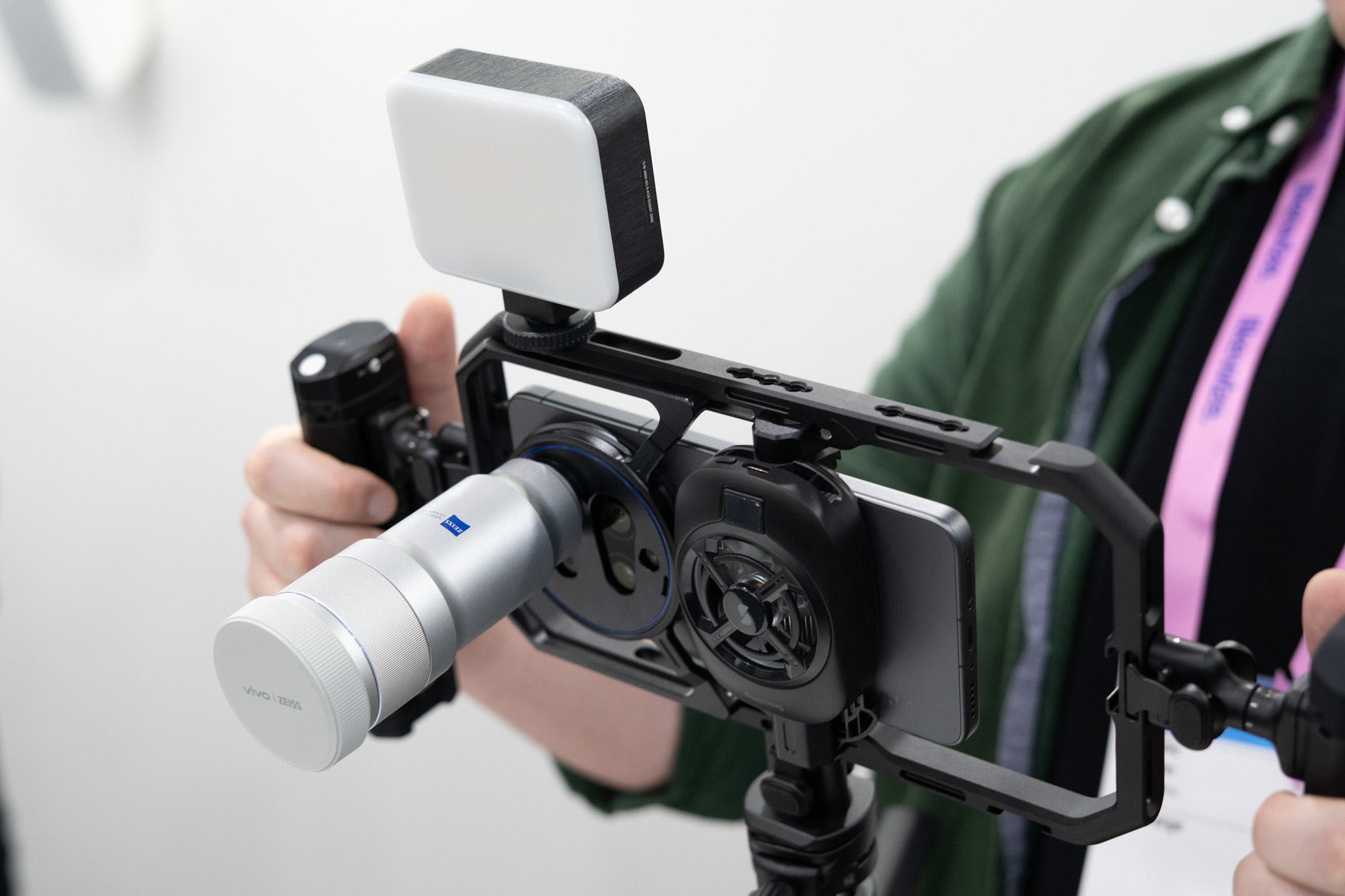
- Prosumer Focus: The redesigned camera cage and grip indicate a clear target: semi-professional creators and videographers.
- Ecosystem Play: This isn't just a phone launch; it's the unveiling of a modular photography system, creating new accessory revenue streams.
- Industry Ripple Effect: Vivo's 2025 extender success has already spawned imitators; this Gen2 launch will pressure competitors to innovate beyond sensor size.
The Barcelona Gambit: Vivo's Calculated Entry onto the Global Stage
Mobile World Congress in Barcelona has long been the domain of established Western and Korean tech giants, with Chinese manufacturers often opting for domestic or regional launches. Vivo's decision to unveil the X300 Ultra platform at MWC 2026 is therefore not a casual product reveal, but a statement of intent. It signifies a matured global strategy, moving beyond the volume-driven mid-range market to directly contest the high-margin, flagship territory dominated by Apple's iPhone and Samsung's Galaxy S Ultra series. The confirmation that the X300 Ultra will be the first in its class sold outside China is the clearest signal yet. Vivo is no longer content being a photography leader in one region; it is marshaling its most potent hardware to compete on the world's most visible stage.
This move reflects a broader trend in the post-2023 smartphone landscape. With overall market growth plateauing, manufacturers are fiercely competing for profitability rather than sheer unit sales. The "Ultra" segment, with its higher price points and enthusiast appeal, offers that lucrative ground. Vivo's play leverages its historical strength—imaging—as a wedge to pry open this segment. By showcasing not just a phone, but an entire photographic system, Vivo is attempting to redefine the value proposition of a flagship device from a general-purpose computer to a specialized creative tool.
Beyond Megapixels: The Return of the Optical Frontier
For nearly a decade, smartphone camera advancement was synonymous with computational photography. Night mode, HDR fusion, and portrait-mode bokeh were achieved through sophisticated algorithms processing data from relatively small sensors. The 200-megapixel sensor, confirmed for the X300 Ultra's telephoto camera, represents the peak of this "megapixel war," but Vivo's latest announcement suggests a pivotal turn. The star of the show isn't the sensor itself—it's the new Telephoto Extender Gen2 Ultra lens that mounts to it.
Doubling the equivalent focal length from 200mm to 400mm is a monumental engineering challenge in a mobile form factor. This collaboration with Zeiss, a storied name in optical science, underscores a commitment to genuine glass-and-lens craftsmanship. It moves the battle from software processing of light to the quality and characteristics of the light entering the sensor. This has profound implications for image quality, particularly for detail retention, color fidelity, and reducing artifacts in high-contrast scenes—areas where computational methods often struggle.
This shift mirrors a growing sentiment among serious photographers. As one industry analyst we spoke to noted, "There's a law of diminishing returns with computational photography. You can only clean up a noisy, optically compromised signal so much. Vivo and Zeiss are betting that enthusiasts are ready to trade some bulk for fundamentally better raw material to work with." The success of the first-generation extender, which sparked imitations from Oppo and Honor, proves there's a market for this approach. The Gen2 lens doesn't just iterate; it boldly expands the very definition of what a smartphone camera can be, venturing into focal lengths traditionally reserved for dedicated wildlife and sports photography gear.
Analysis: The Professional Cage & The Creator Economy Strategy
Perhaps more telling than the lens is the redesigned professional camera cage and grip. The original article hints at added buttons and a revised layout. This evolution points to a targeted strategy: capturing the burgeoning "creator economy." This isn't about casual Instagram snaps. The cage system, with its physical shutter buttons, cold shoe mounts for microphones or lights, and ergonomic grip, transforms the smartphone into a rig suitable for serious video blogging, documentary work, and mobile journalism.
Vivo is effectively building a bridge between the convenience of a smartphone and the tactile, controlled experience of a dedicated camera. By providing these physical interfaces, they are addressing a key pain point for creators who currently jury-rig solutions with third-party accessories. This move locks users into Vivo's ecosystem—the cage and extender are designed for specific phone models—creating a high-margin accessory business and fostering brand loyalty among a highly visible demographic.
Furthermore, this strategy cleverly sidesteps the saturated flagship spec war. While competitors tout marginally faster chips or slightly brighter screens, Vivo is offering a differentiated experience and capability. It's selling a solution, not just a list of components. For a travel videographer or an event photographer seeking a lightweight secondary kit, the X300 Ultra with its cage and 400mm lens could present a compelling, all-in-one alternative to carrying multiple heavy lenses and a camera body.
Broader Industry Implications & Unanswered Questions
Vivo's showcase will send ripples through the mobile industry. First, it validates the modular accessory path as a viable premium strategy, which may push other manufacturers to develop their own proprietary ecosystems rather than relying on universal standards. Second, it intensifies the pressure on traditional camera partnerships. Zeiss's deep involvement with Vivo raises questions about the exclusivity and depth of similar partnerships held by Huawei (Leica) and Xiaomi (also Leica).
However, significant questions remain unanswered, which will determine the X300 Ultra's ultimate impact. Pricing is paramount. The phone, plus a several-hundred-dollar extender lens, plus a professional cage, could approach or exceed the cost of an entry-level mirrorless camera system. Will the convenience and integration justify that cost? Software integration is another critical factor. Will the camera app provide full manual controls (shutter speed, ISO, focus) tailored for the extender and cage buttons, or will it be a gimmicky afterthought? Finally, there's the question of core performance. Vivo remained silent on the chipset, battery size, and display technology. A world-class camera system is undermined if it's attached to a device with poor battery life or a sluggish interface.
Historically, the mobile photography revolution has been one of democratization—putting a capable camera in everyone's pocket. Vivo's X300 Ultra project represents a new, more specialized phase: the professionalization of the pocket camera. It acknowledges that for a growing segment of users, the smartphone is not just a communication device, but a primary creative engine. By betting big on optics and professional ergonomics, Vivo is not just upgrading a favorite phone camera; it is attempting to carve out an entirely new category at the intersection of mobility and serious photography. The success of this ambitious vision will depend on execution, price, and whether the global market of creators and enthusiasts is ready to embrace the phone not just as a camera, but as a camera system.
About This Analysis
This article is an original analytical piece based on public announcements from MWC 2026. It incorporates industry context, historical trends in smartphone photography, and strategic business analysis not present in the original source material. The perspectives and forecasts are those of the HotNews Analysis Team. "Vivo," "X300 Ultra," "Zeiss," and other product names are trademarks of their respective owners.