Key Takeaways
- The integration of the M4 chip into the iPad Air blurs the traditional performance hierarchy between Apple's tablet lines, potentially cannibalizing iPad Pro sales.
- This move is a defensive strategy against aggressive competitors in the creative and productivity tablet space, such as Microsoft's Surface and high-end Android hybrids.
- The success of this iPad Air hinges on iPadOS 26 delivering genuine desktop-class app experiences, not just incremental feature updates.
- Apple is strategically using its silicon advantage to create a "good enough" premium experience at a mid-tier price, expanding its total addressable market.
- The release timing suggests Apple is preparing for a more significant iPad Pro redesign later in 2026, using the Air to maintain sales momentum.
Beyond the Spec Sheet: Decoding Apple's Tablet Gambit
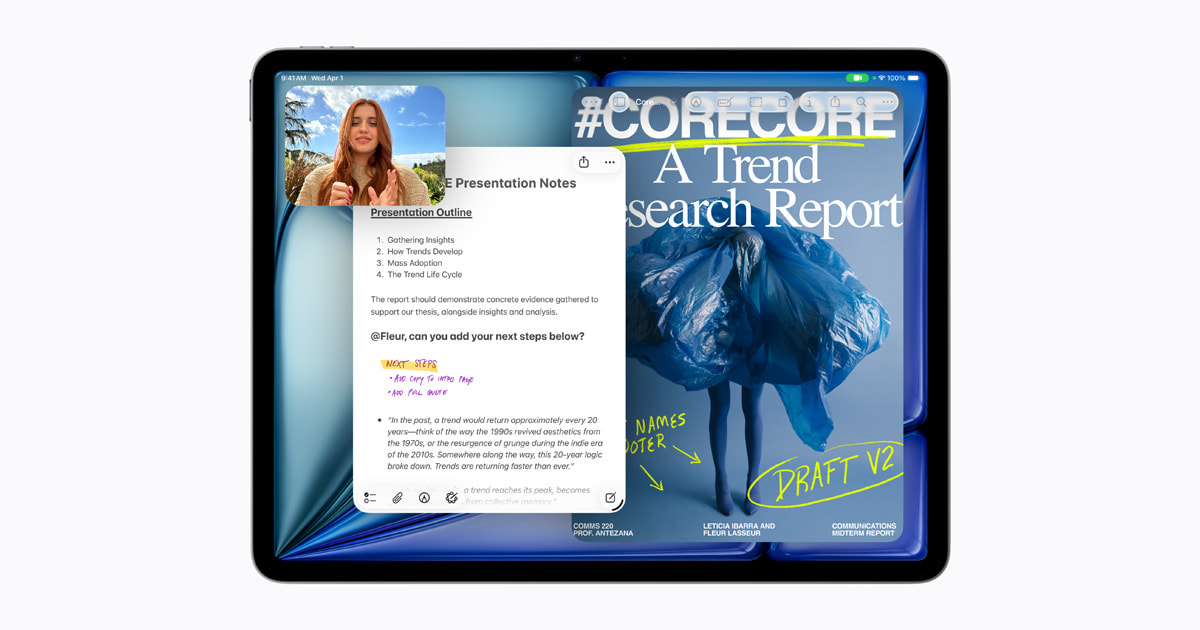
Apple's decision to equip the 2026 iPad Air with its latest M4 system-on-a-chip represents far more than a routine generational update. It is a calculated strategic maneuver that reshapes the fundamental dynamics of its entire tablet portfolio. Historically, the iPad Air has occupied a comfortable middle ground, offering a premium design and capable performance, but always deliberately restrained to protect the technological supremacy and higher price point of the iPad Pro. By breaking this long-standing protocol, Apple is sending a clear message: the competitive landscape has changed, and so must its product segmentation.
Industry analysts have long observed a gradual saturation in the premium tablet segment. The iPad Pro, while a technological marvel, appeals to a relatively niche audience of professionals and creatives willing to pay a laptop-equivalent price. The broader market, consisting of students, hybrid workers, and general consumers, often balks at this premium. By injecting the M4—a chip destined for future MacBooks and high-end desktops—into the Air, Apple is effectively offering a "Pro-lite" experience. This strategy aims to capture users who desire near-professional capability without the professional price tag, thereby stimulating growth in a maturing market.
The Silicon Catalyst: How the M4 Redefines "Mid-Tier"
The heart of this story is the M4 silicon itself. Apple's transition to its own processors was a watershed moment for the Mac, and a similar transformation is now underway for the iPad. The M4's architecture, built on an advanced 3-nanometer or possibly 2-nanometer process node, delivers not just raw CPU and GPU performance gains but profound improvements in neural engine capability and power efficiency. For the iPad Air, this translates into experiences previously unimaginable for the price point: real-time 4K video editing, console-quality gaming, and complex 3D modeling and AR applications.
This creates a significant challenge for competitors. Rival tablets from Samsung, Google, and Lenovo typically rely on Qualcomm's Snapdragon series or MediaTek chips, which, while powerful, operate within a different ecosystem constraint. Apple's vertical integration—controlling both the hardware and the core silicon—allows for optimizations that are impossible for Android-based manufacturers. The M4 in the iPad Air isn't just a component; it's a statement of ecosystem dominance. It raises the performance floor for the entire category, forcing competitors to either innovate rapidly or compete solely on price—a dangerous game against Apple's brand loyalty.
iPadOS 26: The Make-or-Break Software Partnership
Hardware is only half the equation. The promised "game-changing" features of iPadOS 26 will ultimately determine whether this powerful hardware is fully utilized or remains underleveraged. Critics of the iPad platform have consistently pointed to software limitations—the gap between iPadOS and macOS—as the primary barrier to the iPad becoming a true laptop replacement for more users.
With the M4's power now in a more accessible device, the pressure on Apple's software engineers is immense. iPadOS 26 will need to deliver substantive advancements in multitasking, external display support, and file management. Will we see a more flexible stage manager, true windowing for multiple apps, or deeper integration with macOS services? The success of this iPad Air hinges on the software providing a tangible, productivity-boosting environment that justifies the hardware investment. If iPadOS 26 delivers only incremental updates, the M4's potential will be largely wasted on social media browsing and video streaming, undermining the strategic value of this release.
Strategic Context: A Response to a Shifting Competitive Arena
To understand why Apple is making this move now, one must look at the external market forces. Microsoft's Surface Pro lineup continues to evolve, offering a full Windows 11 experience in a tablet form factor, appealing directly to enterprise and education sectors. Meanwhile, Samsung's Galaxy Tab S series has made significant strides in display technology and DeX desktop mode, creating a compelling Android-based productivity alternative.
Furthermore, the rise of cloud-based creative tools from Adobe, Figma, and others has reduced platform dependency. A powerful tablet running a capable browser and native apps can handle work that once required a desktop. Apple's strategy with the M4 iPad Air is a preemptive strike. It aims to solidify the iPad's position as the default choice for mobile creativity and hybrid work before competitors can close the gap on user experience and app ecosystem. By offering unparalleled performance in the mid-tier, Apple hopes to lock users into its ecosystem for years, driving recurring revenue from services like iCloud, Apple Music, and Arcade.
Future Implications and Unanswered Questions
This release inevitably raises questions about the future of the iPad lineup. What does this mean for the standard iPad, which traditionally uses older-generation chips? Will it now inherit the M3, creating an even more powerful entry point? More critically, how does Apple plan to differentiate the next iPad Pro? Speculation suggests the Pro line may shift its focus to more radical form factors—perhaps a foldable design, micro-LED displays, or advanced sensor arrays for augmented reality—justifying its premium through innovation rather than just raw processing power.
Another analytical angle considers supply chain and economics. The M4 is a costly component. By placing it in the higher-volume Air model, Apple may be betting on economies of scale to reduce its per-unit cost faster, benefiting its entire product line in the long run. This could be a masterstroke in supply chain optimization, using a flagship product to subsidize the cost of flagship silicon.
In conclusion, the 2026 iPad Air with M4 is not merely a new tablet. It is a strategic pivot, a market-wide challenge, and a test of Apple's software vision. Its success will be measured not just in sales figures, but in how it redefines consumer expectations for what a mid-priced tablet can and should be. The message is clear: the era of compartmentalized performance in Apple's tablet family is over. The future is about democratizing premium technology, and the iPad Air is now the vanguard of that ambitious mission.
About This Analysis
This editorial analysis was produced by the technology desk at hotnews.sitemirror.store. It is based on public announcements, historical industry trends, and competitive analysis. The perspectives and forward-looking statements contained herein are the independent analysis of our editorial team and are not endorsed by Apple Inc. All product names, logos, and brands are property of their respective owners.