🔑 Key Takeaways
- The U.S. Supreme Court has effectively cemented the legal doctrine that copyright requires "human authorship," leaving purely AI-generated works in the public domain.
- This decision has immediate ramifications for AI developers, digital artists, and content platforms, potentially stifling commercial investment in certain AI creative tools.
- The ruling creates a paradoxical legal gray zone for hybrid human-AI works, which now require complex case-by-case analysis by the Copyright Office.
- Internationally, the U.S. position may clash with evolving frameworks in other jurisdictions, creating global intellectual property friction.
- The underlying legal battle, led by computer scientist Stephen Thaler, represents a decades-long philosophical struggle to define creativity and invention in the machine age.
A Judicial Threshold: The "Human Authorship" Doctrine Hardens
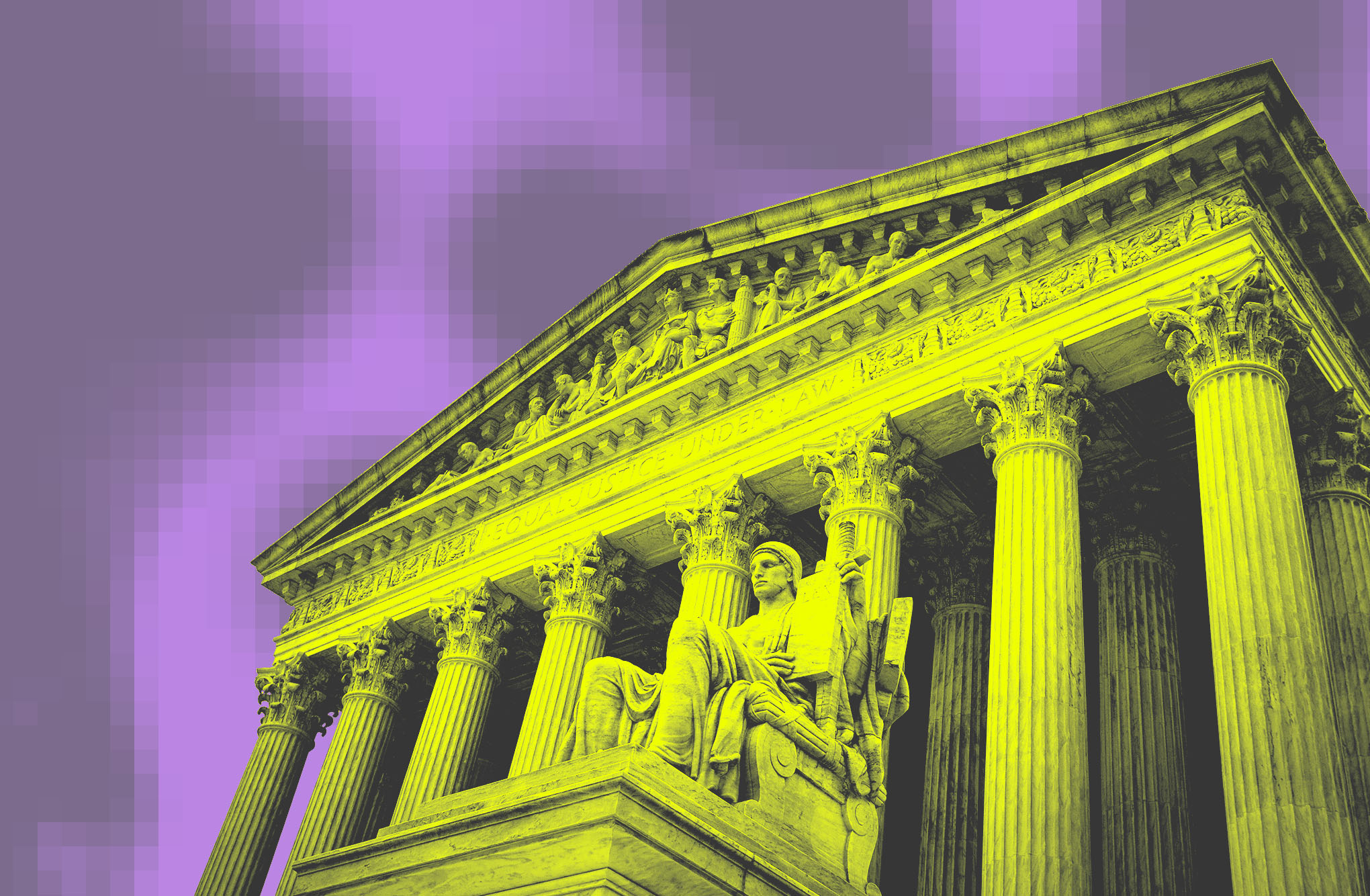
The United States Supreme Court, by choosing not to grant a writ of certiorari this week, has allowed a lower court's ruling to become the de facto law of the land: works created autonomously by artificial intelligence cannot be granted copyright protection. This non-action speaks volumes, affirming a legal principle that has been simmering in U.S. jurisprudence for over a century. The core tenet—that copyright is an incentive and reward for human intellectual labor—has now been explicitly tested against the 21st century's most disruptive creative force and has emerged intact, for now.
The case originated with Stephen Thaler, a figure often described as a visionary or a provocateur in AI circles. His attempt to register a copyright for "A Recent Entrance to Paradise"—an image generated solely by his "Creativity Machine" algorithm—was not merely an administrative filing. It was a direct challenge to the anthropocentric foundations of intellectual property law. The Copyright Office's rejection, later upheld by a District Court and the D.C. Circuit Court of Appeals, framed the issue not as a question of the artwork's novelty or aesthetic value, but of its provenance. Judge Beryl Howell's 2023 opinion was unequivocal: copyright law is "designed by humans, for humans." The Supreme Court's silence is a powerful endorsement of that framing.
Beyond the Headlines: Uncharted Consequences for the Creative Economy
While the immediate outcome is clear for purely AI-generated content, the ruling's ripple effects are murky and far-reaching. The Copyright Office's 2025 guidance attempts to navigate the middle ground, suggesting that works combining human and AI input may be eligible for protection, but only for the human-authored elements. This creates a daunting administrative and legal burden. How does one disentangle the strands of creativity in a digital painting where a human provided the initial concept and iterative feedback, but an AI executed the rendering?
Analytical Angle 1: The Investment Chill & The "Open-Source" Art Flood. Thaler's warning of a "chilling effect" may manifest not on individual artists, but on venture capital flowing into generative AI for creative purposes. If the primary output cannot be monetized through exclusive rights, the business model for many startups becomes precarious. Conversely, this could lead to a vast expansion of the public domain, with millions of AI-generated images, melodies, and texts becoming free for commercial use. This might democratize content creation for small businesses and indie developers, while simultaneously devaluing certain forms of digital art and complicating attribution.
Analytical Angle 2: The International Disconnect. The United States is not operating in a vacuum. Other nations are grappling with the same questions. Japan's copyright agency, for instance, has indicated a more flexible stance, potentially allowing for copyright in AI works if a human "exercises creative control." The European Union's evolving AI Act focuses on transparency and liability but hasn't squarely resolved authorship. This transatlantic and transpacific legal misalignment could lead to "copyright havens," where AI-generated content is registered abroad, creating complex international enforcement nightmares for global media and tech companies.
The Historical Context: From Camera to Computer
This is not the first time technology has forced a re-evaluation of authorship. In the 19th century, photographers fought for recognition as artists, not mere mechanical operators. Courts eventually accepted that the photographer's choices (angle, lighting, timing) constituted human authorship. The analogy to AI is tempting but flawed. A camera is a tool executing a human's instantaneous creative decision. A modern generative AI model is a complex system trained on millions of prior human creations, capable of producing near-infinite outputs from a simple prompt—a partnership where the machine's contribution is arguably generative, not just instrumental.
The parallel struggle is evident in patent law, as referenced in the broader Thaler saga. The U.S. Patent Office has also drawn a hard line, stating that an AI cannot be listed as an inventor. This twin denial—of both copyright for expression and patents for invention—establishes a coherent, if conservative, legal boundary: intellectual property rights are a uniquely human prerogative, a social contract not yet extended to non-human entities, no matter how sophisticated.
Philosophical Crossroads: What Is Creativity?
At its heart, this legal battle is a proxy for a deeper philosophical debate. If an AI produces a poem that moves readers to tears or an image that wins a state fair art contest, on what basis do we deny it the status of "creation"? The law currently answers: intent and consciousness. Human authorship is tied to a mind with subjective experience and purposeful agency. The AI, as Judge Howell noted, lacks the "creative spark" born of "conscious thought and imagination."
Analytical Angle 3: The "Prompt Engineer" as the New Author. This ruling may catalyze the formal recognition of a new creative profession: the AI prompt engineer. If the AI's direct output is unprotected, the value shifts upstream to the human-crafted prompt—the detailed instruction set, the curated series of iterative refinements. Could a particularly novel and specific prompt sequence itself be considered a copyrightable literary work or a trade secret? This shifts the legal focus from the final image to the input text, an area of law far less prepared for such nuance.
Furthermore, the decision implicitly upholds a theory of creativity that is additive and transformative. Human artists build upon a cultural heritage; they are influenced, inspired, and they remix. AI models, by contrast, are often seen as engaging in high-speed, opaque statistical recombination of their training data. Until AI can demonstrate a traceable narrative of inspiration and transformative intent that mirrors the human process, the legal system appears unwilling to grant it the keys to the copyright kingdom.
The Path Forward: Adaptation or Revolution?
The Supreme Court's passivity is not the final word. It simply maintains the status quo as the technology gallops ahead. Pressure for legislative action will mount. Congress could, in theory, amend the Copyright Act to create a new sui generis right for AI-generated works—a limited-duration, ownership-based right separate from traditional authorship. Alternatively, industry may develop technological solutions like immutable blockchain-based attribution ledgers to create de facto ownership norms outside the copyright system.
The most likely immediate future is one of continued friction and litigation. Cases will emerge testing the boundaries of "sufficient human authorship" in hybrid works. The Copyright Office will be inundated with disclosure requests. Platforms like Adobe (with its Firefly, trained on licensed stock) or OpenAI (with DALL-E) may develop new licensing models that grant users commercial rights through contract law, bypassing copyright entirely.
The denial of Stephen Thaler's appeal marks the end of a chapter, but not the story. It has solidified a human-centric legal wall. The great wave of generative AI is now crashing against it. Whether that wall will hold, be rebuilt, or be gracefully bypassed will define the creative landscape for generations to come. The machines may be able to create, but for now, the right to own that creation remains a distinctly human affair.
Further Reading & Expert Perspectives
Legal Scholarship: Academics like Prof. Pamela Samuelson (UC Berkeley) have long argued for adapting, not abandoning, copyright principles for AI. Others, like Prof. James Grimmelmann (Cornell), suggest focusing on the economic incentives rather than metaphysical questions of authorship.
Industry Response: Major tech industry groups, including the Software & Information Industry Association (SIIA), have advocated for a flexible approach that protects investments in AI development without undermining human creators. Artist coalitions, however, largely applaud the current ruling as a necessary protection against the devaluation of human skill.
Historical Precedent: The "Monkey Selfie" case (Naruto v. Slater) involving a macaque's photograph established that non-humans cannot hold copyright, setting a crucial precedent now being applied to AI.